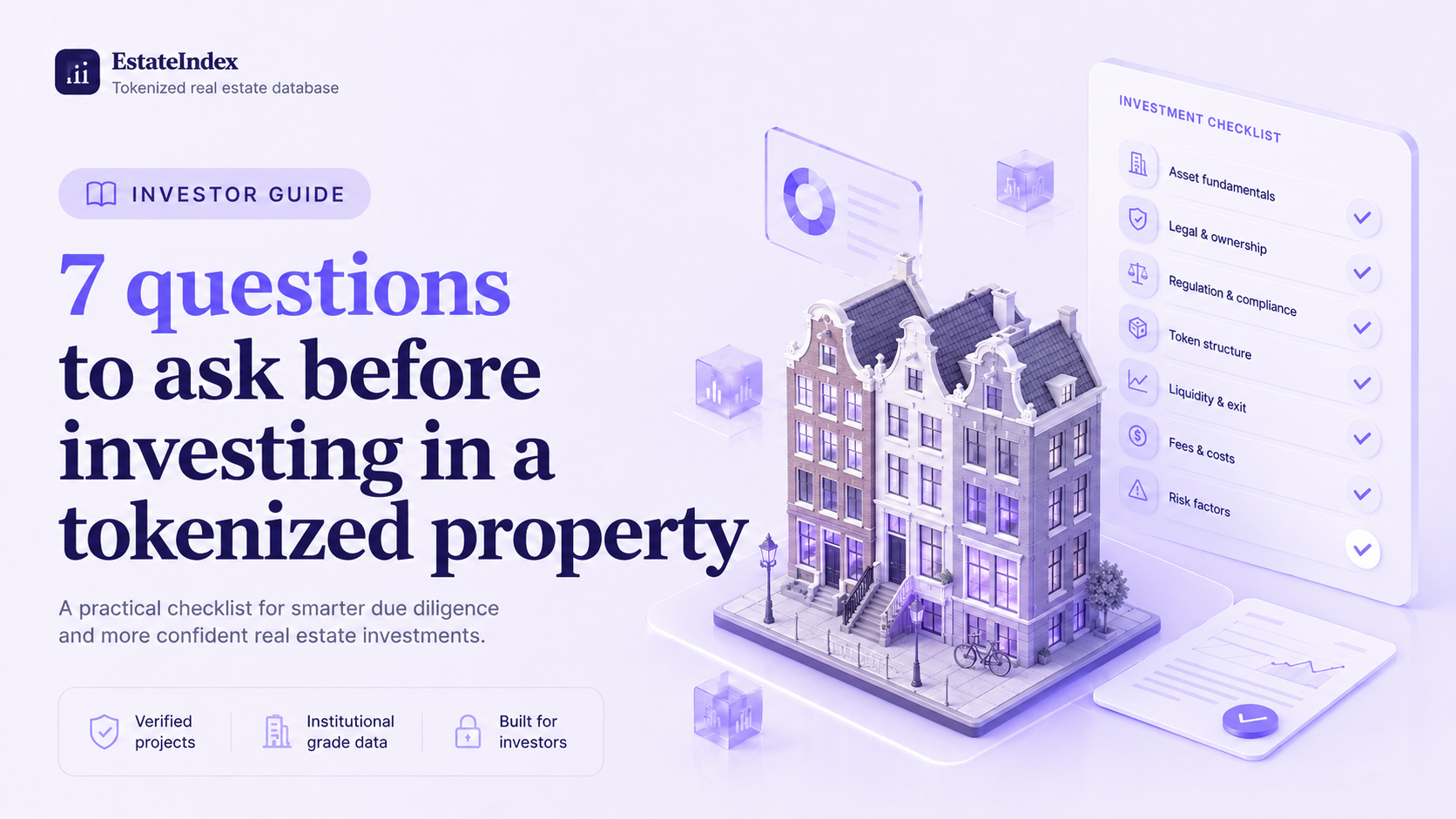
Tokenization of real estate has opened new opportunities for investors, like purchasing fractional interests in the property and trying out new markets. However, new opportunities don't cancel old rules. Investing in real estate still requires caution and due diligence. You should have a clear understanding of what you are buying, who stands behind the project, and what drives the asset’s returns.
- What Exactly Does the Token Represent?
- Who Legally Owns the Property?
- Who Is the Issuer and What Is Their Track Record?
- Is the Project Transparent Enough?
- How Are Returns Generated and Distributed?
- What Risks Should Investors Be Aware Of?
- Is There a Secondary Market for the Token?
- Conclusion
- What Exactly Does the Token Represent?
Direct ownership of real estate through the purchase of a token is not legally possible in most jurisdictions. In most cases, investing in tokenized real estate means acquiring ownership interests, securities, equity, or debt instruments linked to an underlying property. Blockchain or other distributed ledger technology (DLT) typically serves as an infrastructure layer for issuance, record-keeping, investor management, and transfers. Legal ownership of the property itself, however, remains governed by traditional legal entities and official property registries.
Knowing what you are buying is crucial for any investor. New markets like tokenized real estate require even more caution as you should think of its particular risks and benefits. Two different real estate tokens can grant you two drastically different sets of rights and benefits, so it's vital to understand exactly what rights and benefits come with the token. In that regard you should figure out the following:
- Does the token represent a share in an SPV or a revenue-sharing arrangement?
- What rights come with token ownership?
- Does token ownership grant voting rights?
- In the event of a platform shutdown, what happens to your rights?
All of these are important to navigate through the market and distinguish a promising investment from a highly speculative one.
Who Legally Owns the Property?
As with traditional real estate investments the ownership structure behind the tokenized asset is a sensitive factor. The legal structure and investor protections often depend on the jurisdiction where the property is registered. It determines the laws applied to a property and the rights you have.
Each jurisdiction offers different forms of legal protection for property owners and investors and at the same time has its specific drawbacks. Just like choosing the most lucrative asset, it's important to make sure it's registered in a jurisdiction that serves your interest in the best possible way.
Who Is the Issuer and What Is Their Track Record?
Before investing, evaluate the issuer's reputation and operating history. Consider how long the company has been operating, whether it has completed similar projects before, how transparent its disclosures and reporting practices are, and whether reputable third-party service providers are involved in its operations.
When it comes to tokenized real estate, there are several additional factors to consider. Examine whether the issuer has experience in property acquisition, management, and development. When possible, give preference to issuers with a proven track record in real estate rather than technology companies taking their first steps into the property market. Check whether the company makes distributions on time and in full and analyze how it communicates with investors throughout the investment lifecycle.
Is the Project Transparent Enough?
Transparency helps investors assess opportunities with greater confidence. The need for a token issuer company's transparency is vital.
Documents explaining the legal structure of the investment deserve particular attention. The list includes offering memorandums, token holder agreements, SPV documentation, and disclosures outlining investor rights. To evaluate the investment's financial potential, investors should review information on property valuation, occupancy rates, rental income, operating expenses, debt obligations, and distribution history where available.
These documents help investors assess both potential returns and the risks involved. To avoid unpleasant surprises you should ensure that the legal documents are available publicly, the financial information is updated regularly, all the information is independently verifiable, and the issuer provides reports.
How Are Returns Generated and Distributed?
You shouldn't invest before you have a clear understanding of where potential returns come from. Some properties generate returns primarily through rental income, while others rely primarily on property appreciation. Some properties combine both sources of returns. Tokenization doesn't change the main income sources. What it changes is the way ownership records, distributions, and investor communications are managed. Depending on the platform, tokenization may automate payouts and allow investors to track them on-chain.
Another important consideration is the frequency and size of distributions. How often are distributions made? How much can investors reasonably expect to receive? Are the returns still good after the fees and taxes are paid? How are payouts processed? Make sure you have answers to these questions before investing.
What Risks Should Investors Be Aware Of?
Any investment comes with its risks. Tokenized assets and real estate present their respective specific risks to consider. Before you purchase real estate tokens that seem to be lucrative, check the following:
- What market risks affect tokenized property?
- How dependent are returns on occupancy rates and rental demand?
- Some risks may come from the local regulations. What are they?
- What are the operational risks associated with the platforms you use?
Risk management in tokenized real estate is a broad topic in its own right. To learn more about the key risks and strategies for mitigating them, see our dedicated guide.
Is There a Secondary Market for the Token?
Access to a secondary market can be a significant advantage as it may boost liquidity. However, it's important to remember that not all the real estate tokens are the same in this regard.
Checking the current trading activity is a must. Also it's important to check if the tokens can be sold before the investment reaches maturity. Transfer restrictions and temporary lockups can significantly affect liquidity. Learn about them beforehand.
Conclusion
As tokenized real estate sits at the intersection of traditional real estate investing and the growing tokenized asset economy, it brings the benefits and the risks of both to the table. Before you commit capital, it's important to ask a few questions, regarding the exact benefits that come with the token, the issuer's reputation and transparency, the market conditions, and so on. Getting answers to all of these questions will help you to make an informed decision.